
Peugeot 306 long term test
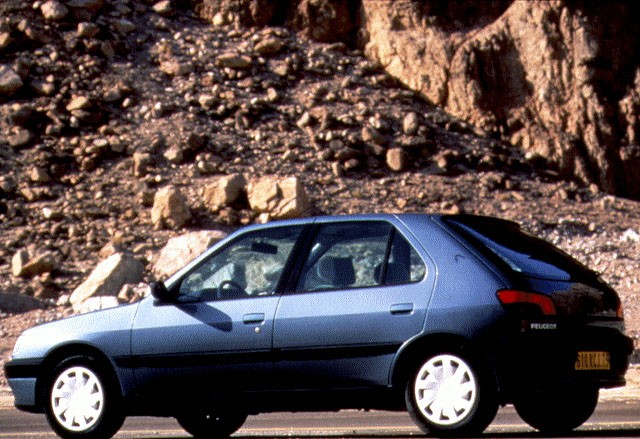
Peugeot's 306 - a cracking buy
Between 1993 and 2002, Peugeot’s 306 was one of the most popular small family cars available in the UK. A replacement for the Peugeot 309 (Does this make the 306 a Talbot Horizon MK3?), the car was styled by Pininfarina, based upon the Citroen ZX platform, and built at the former Rootes factory in Ryton. Engines spanned 1.4 to 2.0 4 cylinders, with a couple of popular XUD-based tractor powerplants thrown in for good measure. Two facelifts; one in 1997 and one in 1999, ensured that the car remained fresh until it’s demise.
Yes, I admit it, the 306 is old news. The youngest of the cars is now seven years old, and its successor has also been replaced. But there is method in what seems like a mad choice of review. I’ve been running the family 306 now for a number of months, and as such I feel it’s the perfect car upon which to cut my reviewers’ teeth.
We’ve had the 306 in the family for about six years. It’s a 1995 M plate 1.8 XT automatic, in Forest green with a beige velour interior. Due to a dealer error, we got it well below book – £1500. . I found a matching car on AutoTrader – Forest Green, beige velour, 1.8XT auto – with twice the mileage but three years newer a plate. That said, it was a late registration in that colour and as a MK1. That car was £950. Given that we paid £1500 in 2003, and I see no reason to sell for less that the car mentioned above at this moment in January 2010, it has cost under a hundred pounds a year in depreciation. That’s as close to depreciation-free motoring as what was then an eight year old car can offer. And I genuinely think that at that money, it’s a bargain worth investigating
Let’s start with the positives. The car is reasonably quick, being powered by a 1.8 four of some 103bhp. The automatic gearbox provides a decent kickdown – not so much in terms of outright urge but I suspect this is more down to the car’s age and the fact that short journeys do not endear themselves to peak engine condition. Another advantage to an automatic gearbox I could not foresee is it’s usefulness in injury. In August I managed to damage the ligaments of my left ankle rather badly. My limp was rather pronounced despite the fact I tried concealing it from family members and friends, yet I was still able to drive in complete and utter comfort. I always feel as though I’m in control too – drive a 306 and you understand instantly why the GTi6 was THE hot hatch to beat in the 90s. The car seems lethargic on paper, but unlike anyone else Peugeot measure these with fully laden cars. It handles well; the passive rear wheel steering conspiring with the excellent chassis to ensure that the car remains sure footed in any real world situation. The steering itself is well weighted, and spirited driving can put a smile on your face.
The ride seems poor, but that can be attributed to the condition of the roads upon which it is used. If I’m honest, it’s certainly no worse than, say, a Jaguar X Type. The car is comfortable, spacious (I’m 6’3″, and have transported people of considerable girth in comfort – for people of a more orthodox size there is plenty of room for five), and with the beige interior, it’s an airy and pleasant place to be. The radio in the car is a Blaupunkt unit, of a design exclusive to Peugeot, and whilst I’ve only ever used it to listen to Radio 2 and Roxy Music compilation tapes I can confirm that it is a good unit; with superb sound quality. The boot is reasonable for the size of car, and on short local runs the car will return twenty miles per gallon. On a long run I am confident the car would return between 35 and 40mpg, which for a large engined automatic is by no means bad. And, purely from an aesthetic point of view, a day spent cleaning and polishing the car, and re-blacking the rubbing strips, can make it look almost new.
However, it’s not all good. I have seen it said that French cars are essentially solid, but the ‘tinsel’ – unnecessary bits such as trim and toys – aren’t of superb quality and will break. This is the case. The radio unit sometimes requires a restart before it will play anything, and even then on occasion it refuses to emit sound. Yes, one piece of trim – the trim surrounding the sunroof switches is currently held in place by two blobs of Blu-Tack; the original clips having succumbed years ago. Yes, one piece until recently resided in the glovebox. But said piece, following some nifty modifications with a penknife and a file, went where it should have been from the factory. A bit of tape to secure the fix lest it break again did the job, and the car is now as close to concours (but filthy – I never wash cars in cold weather) as it can be. The worst bit of the car, though, is the steering wheel. It’s made of a soft touch plastic which looks like elephant skin, yet it isn’t quite so resilient. Fourteen years of be-ringed hands upon it have left their mark – the top half feels as if it is made of sandpaper. And because ours has the rare beige trim, and a rare steering wheel design (In 1995 Peugeot must have used 7 different styles, one of which – ours – is like hen’s teeth), we have been unable to source a replacement. I am, as such, actively seeking a set of driving gloves.
If anything, my praise for Peugeot’s peppy people’s car is higher than ever. I really do understand the car’s appeal, and for the ridiculously low sums they command now, as a Bangernomics advocate I heartily recommend you buy one whilst there are still some decent ones left.
