
Born to perform…
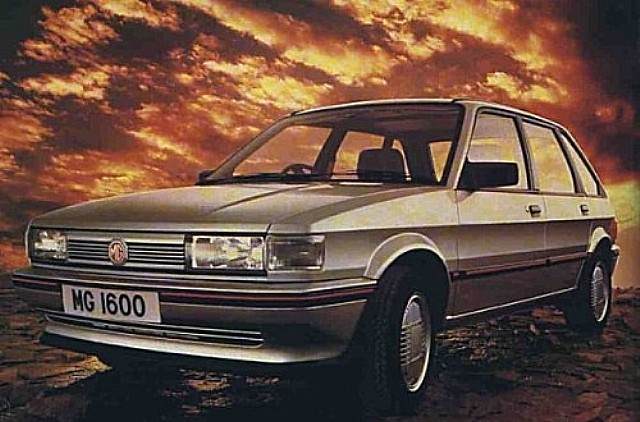
Underdeveloped but underrated - the MG1600
Many Austin Maestro enthusiasts will, if asked, tell you that their preferred variant is the MG 1600 – produced only for the first couple of years, until the launch of the EFi. The sound of the induction roar, combined with the standard ‘Nicolette’ digital dashboard and the interior with overtones of red, make it certainly the most sporting model in the range as far as looks go. The Turbo may have the lairy bodykit, but inside it’s not as special as a 1600. As it happens, my mate Rich Smith has a German spec car – which not only has the dulcet tones of Nicolette McKenzie in English, but also German, Spanish, and Italian voice chips as per all Continental 1600s. it was also left hand drive. An ideal introduction then – a chance to sample all voices, the digital dash, my first left-hooker, and to see if the 1600 is all it’s cracked up to be.
The MG Maestro 1600 has the same R-series (and later S-series, though they’re chuffing rare) 1600cc engine as other 1.6 Maestros, but enhanced courtesy of a brace of Weber 40DCNF carburettors and some improved manifolds. Power is thus increased from 86bhp to a very respectable 103bhp, and 0-60 drops below ten seconds. They’re cheap nowadays too – if you can find one, you’ll not need much more than £1500 to secure even the best – and it’s possible to find them for a three figure sum.
Hop into the driver’s seat, and something’s not right. You feel, unsurprisingly, like a passenger in a LHD car due to the seating position (How many left hookers have been driven with a passenger holding a steering wheel and pretending to lose control, I wonder?), and I’m told that many people try to find the handbrake in the door bin when setting off. I didn’t, and neither did I try to select first with the window winder. What I did do was mis-position the car on the private road we’d earmarked for the acclimatisation. Driving on the left (force of habit given that there was nothing else there) in a left hand drive car is unusual because you are inclined to position YOURSELF relative to the middle of the road. One thing you don’t realise until you attempt driving a car with ‘wrong-hand drive’ is that you don’t position the car, rather yourself relative to the road. It took phenomenal concentration for the first five minutes or so to stay on the right (well, left) side of the road.
And what of the car? Well, put your foot down and the Webers give you a throaty howl – I thought the noise had been exaggerated but it’s really good. It’s comfortable, with great seats and a decent driving position enabling you to really bond with the machine. The gearbox is the VW box that most either love or hate, and with the LCD speedo flickering ahead of me whilst speakers alerted me to fasten my seatbelt (It was in demo mode) I felt like I’d gone back in time to an era of red braces and Blue Nun. I even had a red brace round me – in MG1600s and early EFis the seatbelts and carpets are finished in scarlet. It’s an equally powerful experience to a blast in a Turbo – although it appeals for different reasons. I can understand why to many it is the apogee of the Maestro range – and yet, somehow not. I loved this car, but can I really recommend it? No. The hot-start issues make it too flawed to be recommended. So I shan’t tell you to buy one – but then again, if you want one you will buy one anyway.
