
Sam Skelton decides to settle the raging debate amongst Maestro fans; Which of the MGs is best?
Words: Sam Skelton. Images: Sam Skelton unless credited
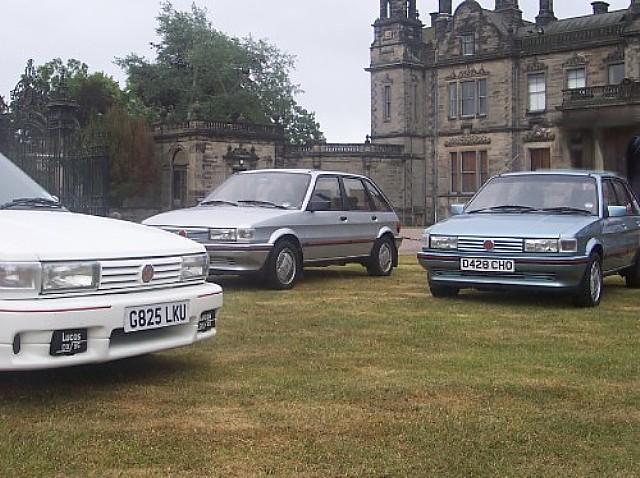
Group Test: MG1600 vs MG Maestro EFi vs MG Maestro Turbo
Introduction
As with so many of the best things, the MG Maestro wasn’t planned. It just… happened. The several incarnations through which it went are all admired and revered by enthusiasts, but there have been debates since the dawn of time as to which of the MG Maestros was the best.
The original MG1600 is touted by many as the purest incarnation. Red braces (or seatbelts, as most would term them), red carpets, a talking LCD dash and the standard Maestro 1600 R series lump (Later S series) avec Webers. But it proved to have quite severe hot starting problems in service, and after just nineteen months Austin Rover replaced the car with the MG Maestro EFi. Early EFis kept the interior niceties of the 1600, but under the bonnet a slightly pokier 2.0 O-series injection replaced the Weber-adorned S series. Later cars lost much of the trim detail, but the late 80s special that was the Turbo made up for this with a mad bodykit and truly mental performance. But which of the three incarnations is the best bet? Which one would you most want to hop into and drive home in? Let’s see.

(Image copyright BMIHT)
MG1600
The 1600 was a last-minute bodge-job by Austin Rover. Having seen the runaway success of the MG Metro, it was thought that cashing in on this with a Maestro based car might be a good plan. So with an MG badge clipped onto the standard Austin grille, some red tinsel, and a pair of Weber 40SCNFs, the MG1600 was born.
And as an experience, it’s really rather fun. The throaty sound of those Webers adds aural drama to what isn’t a quick car, but is fast enough for most. The gearbox – one that enthusiasts love or hate – feels nicer than the last VW box I used, and wearing the red braces the factory provided made myself and my passenger feel like we’d been transported back to the 1980s. The LCD dash didn’t do anything to dispel this illusion – driving with that and with Nicolette McKenzie’s voice emanating from behind the facia seemed like driving KITT’s sister with a Sinclair ZX Spectrum bolted in for good measure. I’ll admit that my mind wasn’t wholly on the car when driving – M+MOC Club Treasurer Richard Smith’s MG1600 is a German market car and was the first left-hand drive car I had piloted, so part of my mind was on positioning the car properly. Interestingly, unlike UK market cars German spec cars can speak four languages. In addition to being switchable between imperial and metric measurements like UK cars, continental Maestros with the digital dash spoke English, German, Spanish, and Italian. The velour seats with tweed panels, sporting alloy wheels, and scarlet carpets only served to reinforce the already strong impression that this was a hot hatch of the 80s.

(Image copyright BMIHT)
MG EFi
Most of this continued into the early MG EFis. However, as the EFi became older things started going missing. The red bits were swapped for grey in 1985, like the Austin models. The tweed seats gave way to velour. And even the alloy wheels, those staple adornments for anything remotely sporting, had been relegated to the options list by 1987, swapped for 14″ steel wheels and plastic trims. The car, by now renamed the MG 2.0i, still had performance and handling on side, but looked far less sporting than before. The 1989 facelift changed all that – new 15″ cross-spoke alloy wheels, a colour coded bodykit, and colour coded rubbing strips in the doors and bumpers. Sadly, the interior did not see the return of red trim, but that was a small price to pay for such external aggression. The 1989MY MG 2.0is (For 2.0is never bore Maestro badges) were possibly the most menacing looking MG Maestro that there ever was, but did their on-the-road characteristics live up to the style?
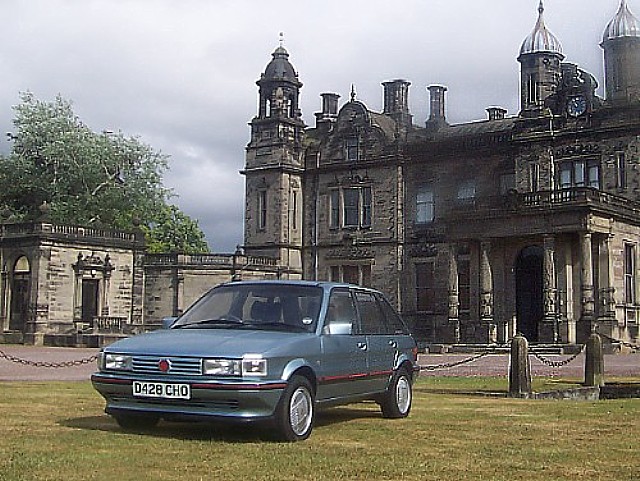
Jonathan Sellars, M+MOC Club Secretary and Webmaster, has owned his 1987 MG Maestro EFi for twelve years. For the last seven, it has been his hobby car, and has recently been treated to a full restoration. From new, it would have had steel wheels and a tweed interior, but whilst Jon has kept the latter and reverted back to the car’s original analogue dashboard he has fitted 2.0i alloy wheels to the car. Hopping in, the tweed seats are as comfortable as in the 1600, and whilst aurally there is less drama the car feels businesslike and spacious.
Aaah, bliss! I had forgotten just how pleasant the PG1 gearbox in 2.0 Maestros and Montegos is, slick as ever and puts even the best of the VW boxes to shame. The engine too – whilst there is little in the way of aural drama to excite as there is in the 1600, the additional power and torque change the nature of the car. Rather than being sporting, it now feels genuinely rapid and comfortable – a hot hatch that could snap into a comfortable long distance mile-muncher whenever it’s owner grew bored of blatting round country lanes on a petrol high. I was not inclined to push the EFi truly hard, as a cherished classic rather than a regularly used hack it wouldn’t have been fair to treat it roughly, but my brief experience certainly gave me a taste of what such a car would be like on a day-to-day basis.
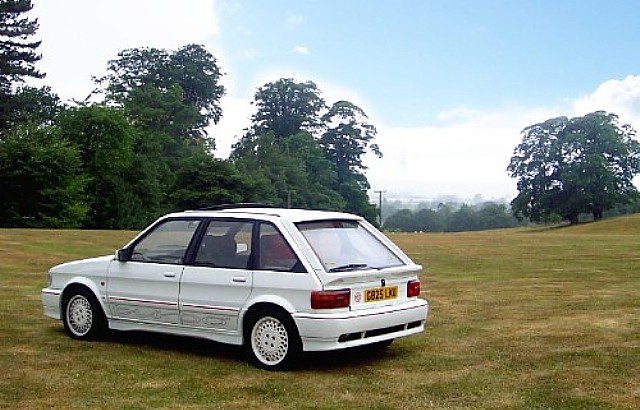
MG Turbo
The MG Maestro that everyone remembers, however, is the rare and desirable Turbo. Using the turbocharged O-series engine first seen in the MG Montego Turbo of 1985, and with a tough looking bodykit, the car was available in just four colours – Flame Red, BRG, Black, and White Diamond. With 152bhp, the car would rocket to 60mph in under seven seconds, and propel it’s occupants to the wrong side of 125mph. Inside, the car didn’t differ from the MG EFi – the rear electric windows available on Montego models were not added to the Turbo’s already enticing package. Bodykitted and given graphics by Tickford, just 505 were made, and although many Maestros have received Turbo upgrades, the originals are more desirable and considerably higher in value due to their rarity.
Turbo #396, owned by John Orrell, isn’t exactly as it left the factory. It’s his plaything, and has a modified grille, no rubbing strips, and larger wheels courtesy of an MGF. Not that he’s a philistine – he owns #502 which must rank amongst the top five original cars – but he wanted this to be his toy. “Push it,” he was telling me from the passenger seat – he insisted upon coming along to make sure I got the full potential from the car – “don’t change up now, change back into second and floor it properly”. Wow. Wow wow wow wow wow. This car has the ability to reshape time itself. However, I’m not convinced that MGF wheels were a sensible upgrade without lowering the suspension to maintain a standard ride height. Maybe it was the camber of the road, but at speed the car had a tendency to wave rather badly – fear took over and I started to back off. Inside nothing was really different to the EFi – as I’ve mentioned, the interior got no special adornments to advertise their rare status. What was the greatest surprise was the refinement and serenity with which the car catapulted me towards the horizon – I had expected more noise and buffeting from the car than actually was present.
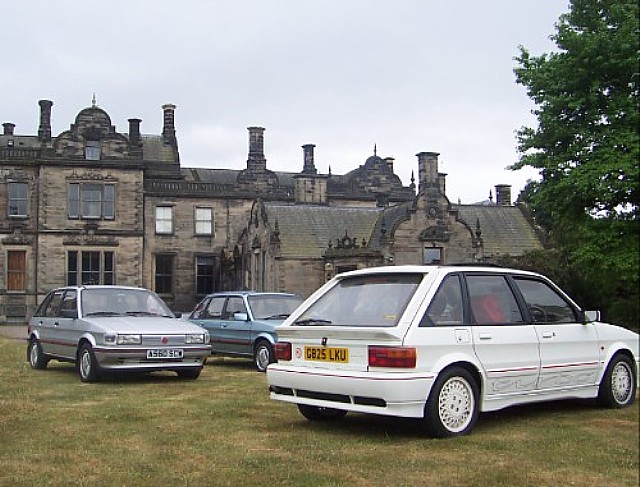
Verdict
So three very different experiences, and it’s down to me to choose between them; to decide which is the best. All will seat five, all are comfortable, all have reasonably capacious boots. All are even fairly cheap to run – none is that thirsty, and most bits are available. First to fall by the wayside is the one that ultimately is most of an experience. Much as I liked the MG1600, the hot start issues would put me off trying to run one daily. And as I see it, a car that you couldn’t press into daily service if need be isn’t really worth the hassle. Second place goes – very reluctantly; I may not be a speed freak but I loved it – to the Turbo. I doubt that in the real world you’d find it much quicker than an EFi and the rarity brings a price premium. If truth be known, I’m also not a fan of the Turbo bodykit. Which leaves the EFi to take the laurel wreath and the champagne. It’s a capable car, that I reckon would be reliable enough and quick enough to use daily with no concerns. It’s also common enough to be available cheaply if you know where to look – you can get MoTed cars for a thousand quid and good ones for under two. My recommendation would be either a very early car – if you like the red bits and digidash – or a colour coded 2.0i if you don’t. Either would be a cracking car to own.

Great articles on the MG Maestros -thank you!