
The upcoming launch of the Aston Martin Cygnet, combined with the current cost of fuel, makes this a good time to consider past attempts at frugal luxury cars. Sam Skelton pits four of the most interesting attempts against the Cygnet to see which is best. In a test with a difference however, none of them has been driven…
Words: Sam Skelton.
Group Test: Vanden Plas 1500 vs Panther Rio vs Avon-Triumph Acclaim vs Rapport Ritz vs Aston Martin Cygnet
Introduction
We’ve all been there. Sitting there, nothing to do but let your thoughts wander idly, and had a brainwave. As an aspiring motoring journalist, many of mine are for road tests and back to back articles. One recently popped into my mind that would be interesting to see the results, of, not just because it’s an odd test, but because it’s unlikely we’ll ever have the opportunity to get all the cars in the same place at the same time. Indeed, I’m not even sure if there are any survivors of one of my choices. Then a mad idea appeared almost out of nowhere. What about a back to back of their static qualities, managing to neatly skirt the issues of obtaining examples to properly test? A review at second hand then was what I decided to do, to offer my thoughts based on no more or less than pictures, facts, and figures. Intrigued? Read on.
The cars I had the notion of grouping together were the Vanden Plas 1500, the Panther Rio, the Triumph Avon Acclaim, the Rapport Ritz, and the Aston Martin Cygnet. The Vanden Plas and Aston should have been child’s play to find – as I write there are three or four of the former on eBay and the latter’s brand new. However, they made 38 Rios, and less of the two others, so finding examples to test is easier said than done.
So why are these cars so rare, and why for that matter does the review need to be written? Simple. The Cygnet is the latest in a line that these cars all represent; a plushed up economy car, based on something far more mundane but with separate characters of their own. I could have cheated, and tested examples of the Austin Allegro, Triumph Dolomite, Triumph Acclaim, Honda Accord and Toyota IQ respectively, but to do so would be to miss the point. These cars are more than the sum of their parts; more than a box with a bit of cow and tree. They capture the mood of their time, and perhaps more importantly capture the mood of the moment. With petrol currently retailing at about £5.40 per gallon, plush yet penny pinching motoring has got to be the way forwards.
The Cars
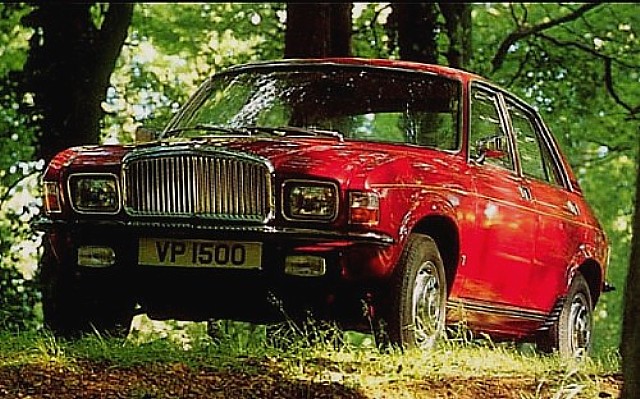
Let’s start with the Vanden Plas. Launched a year after the Allegro in 1974, the Vanden Plas 1500 was the second little car to get the VP treatment. A walnut dashboard reminiscent of the then current Jaguar XJ, walnut door cappings, and part-leather seats transformed the petrochemical interior of the standard car into something almost regal. A humped bonnet and Jag-aping grille did the rest, and the picnic tables standardised for the Series 2 of 1976 completed the already upmarket package.
No-one was fooled, of course. Unlike it’s ADO16-based predecessor BL only permitted a single panel change for the 1500, and it ended up looking like an Allegro with a pig snout. Despite the ‘A’ word not appearing anywhere on the car, most now know it as the Allegro Vanden Plas. Yet the apparent link with what became BL’s biggest joke doesn’t really seem to have hindered sales of the Vanden Plas – with almost twelve thousand leaving the Kingsbury (and later Abingdon) works in six years. Sales toward the end of production were still reasonably strong – the car was only shelved because it wasn’t cost-effective to produce.
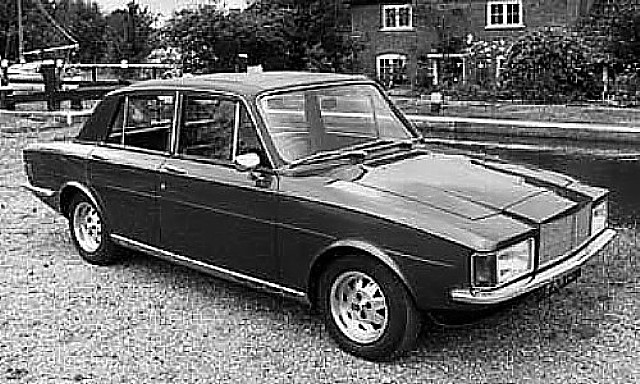
As a compact sporting saloon filled with wood and, er, nylon, most found the Triumph Dolomite 1850 and Sprint upmarket enough for their needs. It wouldn’t be unreasonable to describe the quick Dollies as the 325is of their day. Yet Robert Jankel felt that more could be done. Aware that nobody was buying his expensive and thirsty SS100 replica, the J72, he sought to offer a smaller yet equally upmarket and exclusive conveyance. And so the Rio was born. Reskinned in aluminium, with parts-bin lights and a leather-lined cabin, the Panther Rio resembled a baby Royce. Indeed, the Bentley Mulsanne of five years later looked spookily as if Jankel’s drawings had merely been scaled up…
It had definite appeal, especially the Sprint-based Especial. Autocar’s Andrew Shanks praised the car in 1975, approving of the sharp aluminium lines and the car’s specification. But at 125% of the cost of a V12 Jag, it was just a touch expensive – the difference would have bought a lot of four star in 1976. As such, just 38 Rios – 19 1850s and 19 Especials – were sold.
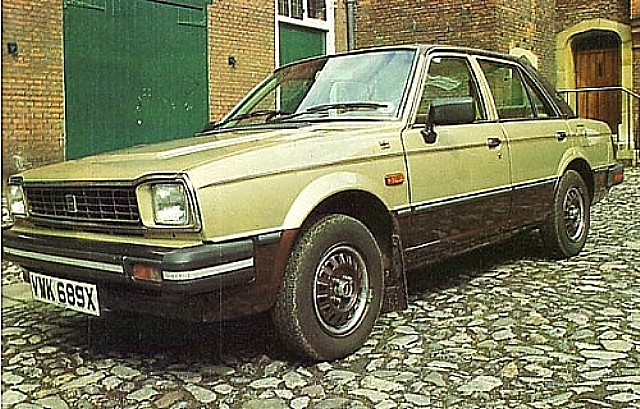
Avon’s Graham Hudson had much the same idea as Jankel six years later; to make a compact yet cosseting car from Triumph’s small saloon. The difference, however, is that the Avon-Triumph Acclaim retained the standard car’s shell. Duotone paint, a chrome grille, a vinyl roof, leather seats, and wood screwed to the Honda dash were the main deviations from standard spec. Hudson’s pricing system was equally sensible – £1365 over the standard car may have been a hefty cost-option but it wasn’t as excessive as the Rio. What Car praised it’s quiet cabin, courtesy of copious soundproofing, but weren’t as complimentary about the quality of the walnut dash fittings.
The Avon isn’t as scarce as you might think either – a couple have surfaced on eBay in recent months. And if walnut and leather aren’t your thing, you could always try and track down one of the even rarer Avon Turbo Acclaims. Trimmed in suede, and lacking the plush niceties of the standard car, the turbocharged variant made up for this with Wolfrace Sonic alloys, a ridiculous chin spoiler, and a huge turbo.

Like the (standard) Avon Acclaim, the Rapport Ritz is Honda based – being Chris Humberstone’s interpretation of the theme already established by Jankel and Hudson. The Ritz was, like the Avon, Honda-based. The Accord 1.6 and 1.8 were subtly restyled and plushly retrimmed by Humberstone’s Rapport group. Well, maybe not subtly restyled. The aerofoil hiding the front lights, the reshaped wings, the new bumpers, and the pretty alloys served to transform the bland Accord into… well… something that whilst not pretty was certainly an intriguing shape. Interestingly, the third generation Honda Accord of 1986 featured a similar wedge profile.
The Ritz doesn’t seem to have sold so well though – I can find no trace of a real Ritz surviving, and I doubt they made enough for production to hit double figures. The all-too-obvious artwork mock-ups of estate and convertible in the brochure don’t seem encouraging, and the token strip of wood bolted to what otherwise appears to be a standard Accord dash hardly appears to be a quality product. The seats look good, but overall I’m not convinced it works.
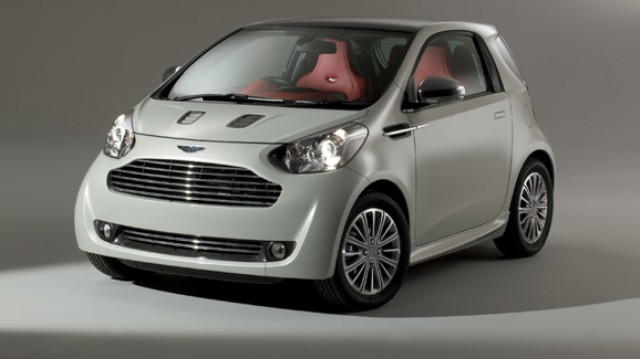
There the trail seems to go cold. Through the 1990s the closest I can find to a small yet plush car is the vaguely ridiculous Mitsuoka Viewt; a Nissan Micra based pretend-MKII Jag. The Noughties saw the brief revival of the Radford Mini, but it’s not really the same sort of thing – the Mini Miglia’s red suede dashboard smacks more of the gauche than the grand. Toyota’s recent collaboration with Aston Martin however, has yielded something interesting. No, not that Lagonda-Cruiser gin palace, the Cygnet. It may look like an iQ that’s crashed into a poster of an Aston, but to think that misses the point. The Vanden Plas, remember, looks like an Allegro that’s gone to a fancy dress ball as a Jag.
I can’t comment on Cygnet sales yet, save to say that there are bound to be hundreds of people desperate to buy their brand new Astons at thirty grand a pop. What I can do is question the sanity of the powers that be, for allowing the Aston name to be used. What may seem clever now can only devalue the name over time – better to have reinstated the Lagonda name on the Rapide and to use that for the plush saloon side of the range.
Prices today
Only two of these cars can be given a true value on today’s market, thanks to the scant numbers produced of the other three. Aston Martin’s soon-to-be-launched Cygnet will inevitably be costliest at about £30000, but for that you do get a brand new car, specified exactly to meet your needs and taste. The Vanden Plas represents far less strain upon your wallet – whilst price guides say a good one can be yours for £1500 or so, some truly superb examples have been bought on eBay recently for up to £2500. The message is clear; prices won’t stay low forever, so if you fancy a slice of 70s prestige buy now.
The Panther, Avon, and Rapport are harder to value, due to their rarity. Few price guides list them, and it’s not easy to make a judgement based upon cars which have recently sold. The Panther will command a large premium over the basic Dolomite due to it’s rarity and desirability, not least amongst Dolomite collectors and Panther owners wanting a car to take the family to shows. If you can find a Rio for less than £6000, it will be a once-in-a-lifetime opportunity. The Avon Acclaim commands less of a premium over it’s humbler brethren. A couple have sold recently for typical Acclaim money – if you can find an Avon, you’re unlikely to need more than £1300 to secure it. And what for the Ritz? The Accord upon which it is based still represents excellent value if you can find one, but if you really want a Rapport Ritz it’s a seller’s market out there. I would not be surprised to learn that survivors amount to low single figures, so it really is a case of getting what you can – whatever the cost.
Verdict
I suppose that last place can only really go to one car here. Brilliant idea though the Rapport Ritz was, that dashboard looks a little tacky and, well, cheap for my tastes and the body changes turn a bland car into one that from the front is quite offensive. The seats and very Allegro Equipe-esque alloy wheels go some way to restoring the balance but it’s not enough – I’ve seen less tacky products coming from the Sellotape factory. Couple this to the inflated price that such exclusivity will bring and it’s hard to see a reason for placing this car higher. Fourth place goes, somewhat reluctantly, to the Avon. Don’t get me wrong, I think it’s an excellent little car and that it should have been far more popular, but the quality of some interior fittings was questioned when new. On a car that is supposedly all about the cabin, that’s not good enough. The exterior treatment also is of dubious taste – whilst I personally like it, I suspect I am in the minority.
Which brings us to the Aston Martin. As good an idea as the Cygnet may be, I can’t help but think that at over double the cost of the basic car it’s overpriced for what it is – consider the Panther Rio’s story and it is clear that overpricing a small prestige car results in pitiful sales. Using the Aston brand on something less sporty than I am is another colossal error of judgment for the company, and long-term can only do damage to the Aston Martin brand. It takes the bronze. Silver award goes to the Panther Rio. A car that looked and was genuinely upmarket, with a sensible base product well disguised, should have been an excellent money-spinner. Sadly, it was too expensive – at two thirds of the price it would have sold like hot cakes. The winner of this comparison is the only one that did. Despite looking strange, the Vanden Plas 1500 achieved well in excess of ten thousand sales, and there are still hundreds left today, many in regular use. When was the last time you saw a Rio, Ritz, or Avon Acclaim in a museum, let alone on the road? Coupled with the 1500′s popularity was an interior which ticked all the right boxes and a price one could and still can afford – buy one, it’s the ultimate car for the next decade.

