
For most confirmed petrolheads, this twin test will be pointless. Indeed, as a lover of large, multi-cylindered luxobarges, had you invited me to do a back to back test of small diesel vans, 99% of the time my answer would have been no. Yet I’ve done a fair few miles in a couple of the better ones recently, and a comparison seemed like a good thing to do. If you’re a small business owner, or have any other reason for needing two seats and space for a very big box, then read on.
Words: Sam Skelton. Images: Sam Skelton, PSA
Introduction
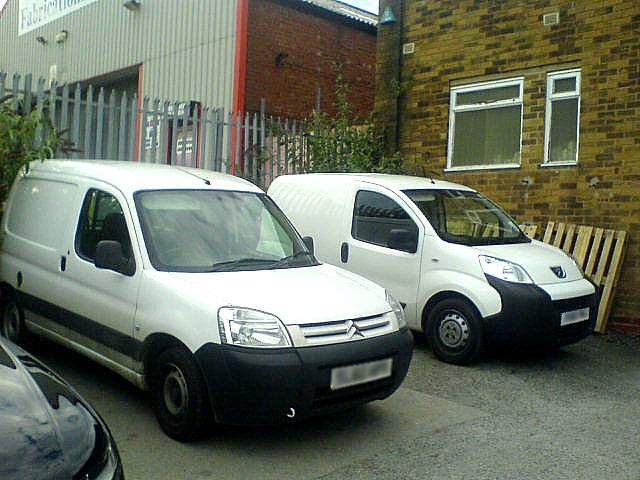
The first van I’m going to look at is the Citroen Berlingo First. Essentially, this is Citroen’s budget alternative to the Berlingo – a last-gen Berlingo with the 1.6HDI ’75′ engine and very little else. With prices starting under £10000, it’s a tempting proposition. However, for a couple of hundred quid more you could compromise on outright size and choose a far newer design. Peugeot’s Bipper, twin to the Citroen Nemo and FIAT Fiorino, uses a 1.4HDi engine putting out 70bhp. Whilst smaller than the Berlingo, it’s payload of 690kg is usefully higher.
Both the vans on test are about a year old, with 7500 miles. In the metal, they don’t seem as well matched as they do on paper. With it’s ‘Plus pack’ the Berlingo offers electric windows, remote locking and other niceties. The Bipper, with it’s keep-fits, lack of even central locking, and it’s frankly silly name seems to be the less capable of the two when you first clap eyes on them. So, naturally, it’s the Berlingo I want to try first.
Space
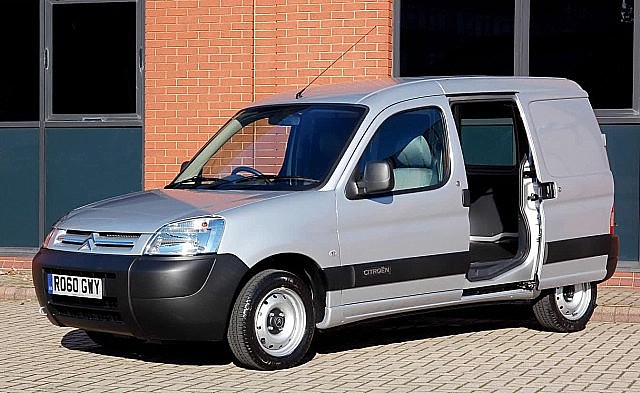
An old design, but does it still stack up?
The optional side door of the Berlingo is usefully large, accepting a baker’s pallet with ease. The rear doors are again large – but then, they are ample on any van. The Berlingo has a rated weight of 600 kgs, approximately 12cwt in old money.
The Bipper’s side door is smaller – the pallet will only go in if angled – risking spilling many loaves in the process. However, the asymmetrical back door proves useful for larger loads – where in the Berlingo both doors needed to be opened the Bipper managed with just the one. A great feature I never needed was the ability to drop the passenger seat – increasing the maximum load length to virtually that of the van. It’s rating of 690kg – one and a half hundredweight more than the Berlingo, is useful too!
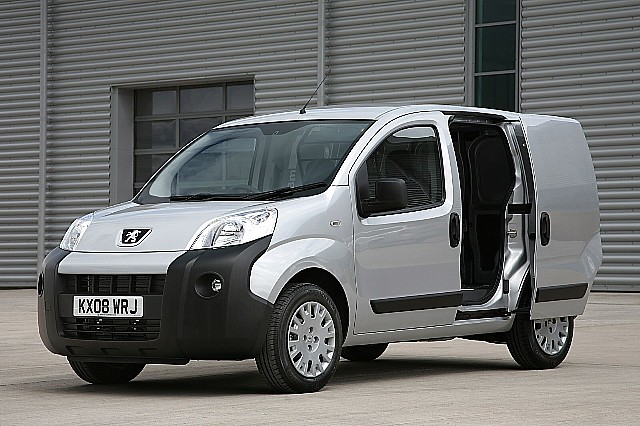
Bipper side door narrow - but the van is the bigger of the two.
Comfort
The Berlingo cab is cheap-feeling, but well-fitted to working. There’s plenty of space for a mobile phone, TWO 12v sockets for your satnav and phone charger, and plenty of space for lunch and copies of the Sun. The seat is comfortable, and the heater/blower – vital in any working environment to enable the busy van driver to keep his cool – works well, with the ability to direct cool air at the face and feet at the same time.
The Bipper loses out slightly. With one fewer cupholder than the Berlingo, one fewer 12v socket, and slightly less space, it initially looks to be a worse prospect. But there’s a cubby for one’s sunglasses as well as one’s mobile, and the blower is just as good. Pity it can’t do face and feet, mind.
The driving position of the Bipper is more to my taste than the Berlingo. You sit higher, with the gear lever protruding from the dash in a manner redolent of the Citroen 2CV – it feels snug and car like whilst providing a good view over the stubby bonnet. There is no interior mirror because there are no rear windows – whilst this hinders reversing in tight spaces, it rarely poses a problem. Both door mirros are adjustable.
In the Berlingo you sit lower, with a long, floor mounted gear lever – it feels more workmanlike than the Peugeot. With it’s rear windows it theoretically offers more visibility than the Peugeot – yet because of the side hinged twin doors there’s a pillar where you need to see. It appears to be prudent, in my view, to opt for a lack of rear glass – what you have is unusable and only serves to show potential looters your load. The nearside mirror appears to be fixed in the Berlingo – a pain, but it doesn’t vastly hinder vision.

Peugeot Bipper interior better thought out than the Berlingo's - feels better too.
Performance and Driving
Move off in the Berlingo and it’s surprising – a good ride, great gearbox, and BY GOD a good little engine. It might only be a 1.6 diesel with 75 bhp (Derived from the Ford DLD joint venture with PSA and also used in everything from the MINI Cooper D to the Volvo V70), but it can shift. First gear is by and large useless, as it can pull second from single figure speeds – one can quite understand how van drivers are able to cut up ordinary motorists. Using (as it does) essentially the front half of a Peugeot 306 chassis married to the back end of a 405 estate, the Berlingo feels fun to chuck about. Beware your load however – the boomy rear quarters of my test van were unlined, leading to alarming sounds if loads began to shift about. It’s crucial to mention at this point that older Berlingos are not as good – I have driven a three year old, 100000 mile van which refused to move despite the most leaden right foot I could muster, which was noisier and felt far looser all round. Buy as new as you can afford, and whilst the older XUD engine has a deserved reputation for reliability I would recommend the HDi in the one on test here.
The Bipper is not technically a PSA product – whilst it bears the badge, this van is actually based upon the FIAT Grande Punto. The engine, however, is a 1.4 litre, 70bhp variant of the Ford/PSA DLD used in the Berlingo – this type shared with the Ford Fiesta and the Peugeot 206. Lacking the torque of the larger engine, and with higher gearing, the ‘box needs to be worked more than in the Berlingo. Yet this is no problem – compared with the Berlingo – identical age and mileage – the Bipper feels far tighter, newer, and more modern. It’s a pleasure to punt about, and thanks to the lined cargo area and higher gearing the Bipper is better on the motorway than any Berlingo could hope to be.
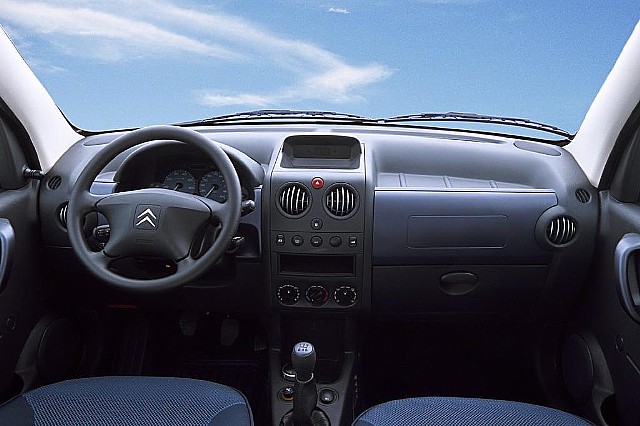
Berlingo interior cheap but workmanlike, with some nice details
Value
The Berlingo is undoubtedly the cheaper of the two new – but it feels it. Those cheap plastics, the floppy and loose feeling at just 7000 miles, and the unlined cargo bay conspire to make it feel a bit low-rent. Fine, given that it’s not meant to be anyone’s pride and joy and that as a company vehicle keen pricing is key. But the Bipper – from the same parent company as the Berlingo First, we must remember – manages to feel tighter, quieter, and more upmarket. It’s also got a higher payload rating despite having marginally smaller door openings – on value the costlier Bipper has it.
Verdict
Despite the popularity of the first-generation Berlingo, it’s obvious that it’s had it’s day. Whilst it is phenomenally quick for a van, easy to load and unload, and cheap, when compared with PSA’s own subcompact it doesn’t quite live up to the standards set. If your budget doesn’t stretch to the Bipper, than the Berlingo First is a cracking tool – do not get me wrong. It’s just that the Berlingo manages to be better at being a van by dint of it’s higher payload, and better at being a driving tool by dint of it’s more carlike and more upmarket feel. A deserving winner, then.
I’d like to trial both against a current Berlingo at some point, though. Whilst the current Berlingo is noticeably bigger than either of these, I’m not convinced that for the small business owner or local delivery driver it offers anything more than the Bipper can achieve. The Berlingo First and it’s Peugeot equivalent; the Partner Origin, have just been discontinued – PSA clearly recognise that three seperate small van ranges under each brand offers too much choice to the small business owner and eats away at profit margins. I’m not convinced they needed two, though. The Bipper and Citroen Nemo do their job most capably – and if anything larger is needed then the Transit sized Dispatch would be more than up to the job.
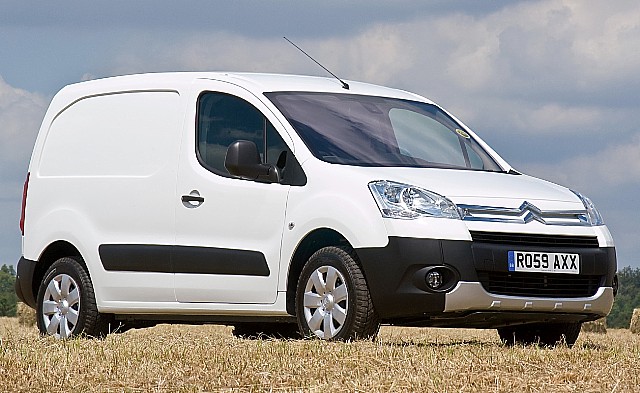
Do the Bipper and it's Nemo twin render this new Berlingo pointless?
